Day 2 of the trip took us to the Loire vine research station – lycee Edgard Pisano et C.F.A.A 49.
Loire vine research station – lycee Edgard Pisano et C.F.A.A 49
The reseach station is one of many in France. Part finder by the state and part by industry, they are looking at a number of vine growing issues.
How reduce the inputs to make vine growing more efficient.
How to to control pests and disease’s
Come up with new varieties of vines.
The picture below is where the rootstock was grafted onto experimental variety that did not work, they then grafted a second varietal onto the rootstock as that was already established.
Loire root stock
When it comes to disease resistant they have found the 4 genes that relate to issues with mildrew and have bred a variety that is resistant. They are now trying to cross this with a varietal that actually has taste, as the original is very neutral. They tried GM vines but they found that these were sabotaged, people did not like them being grown and tried out.
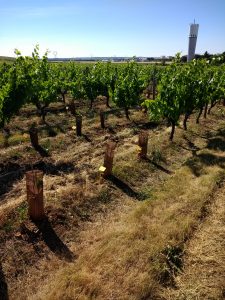
One of the main areas they are looking at is how to reduce the inputs to make vine growing more efficient. This includes different mulching and if you should replace individual vines in rows that have died, probably not.
Loire research replacing vines
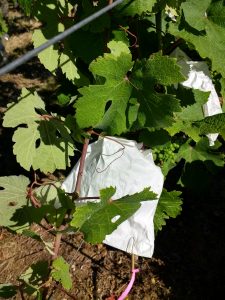
The bags are where they have hand pollinated disease resistant and taste verietals. These are white varietal ones because the red varietal are done in Bordeaux.
Loire research replacing vines
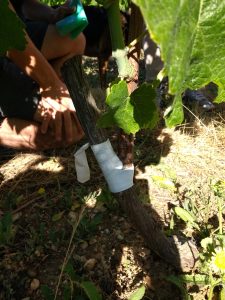
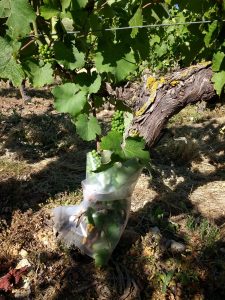
Plastic around the base of the vine is where they have grafted a new cane (branch) onto the European top to create a new cane where one has died, the plastic is there to protect the new cane.
Loire new cane replacement
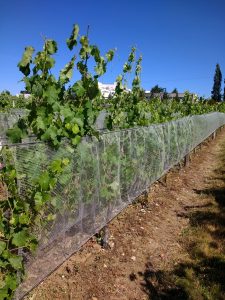
The white strips on the vines are anti hale netting, they’ve not had hale yet.
Loire anti hale netting
Also looking at trying to set up eco system that will help look after the vines from powdery mildew by planting vegetation that has have the mildrew and the predators of powdery mildew they hope these established predators will help the vine.
Their sparkling wine is made from Chenin Blanc, Chardonnay and Cab Franc. It is made from grapes grown at the research station at a local co operative. There are aroma’s and flavours of peach, green apple, lemon and with high acidity.
Next on day 2 was tasting and lunch at
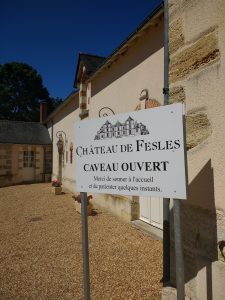
Chateau De Fesles.
Chateau De Fesles, Loire Valley
whites included – Chenin Sec 2016. Aromas of melon and lemon with freshness and mineral notes. Light creaminess to the taste with slight vanilla coming through. The fresh acidity helps mask the 13.5% alcohol. Easy drinking summer wine.
The 2012 version has honey notes and a smoky Oak undertone. The acidity is there there but it’s masked by the honey and not to my taste.
Rose Anjou 2018. Aromas of strawberry raspberry, red fruit and bubblegum. The only downside is this is a sweeter wine and that really comes through. Love the smell, just couldn’t drink lots of this.
There were several red wines, Cab Franc’s were good to excellent, usual red fruit and black cherry aromas and flavours. Well worth the visit. Wines ranged from Eur6-Eur30 a bottle. Decent value.
The next tasting was at Domaine Filliatreau. The tasting rooms are in the caves on a side of a hill.
Domaine Filliatreau, Loire Valley
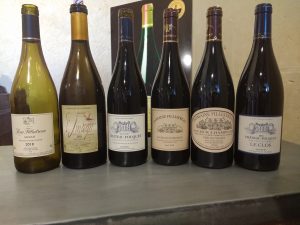
The white wine was full of flavour, with richness and and urge to have food with them. The Cab Franc red wines were excellent. Lots of red fruit, black cherry and light to medium tannins. At Eur 9-Eur25 per bottle, they are not cheap but pretty good value. We got 4 bottles to have when we get home.
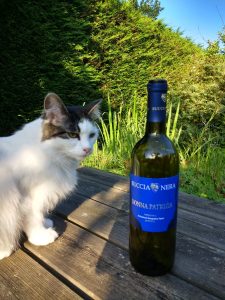
Made with 3 different grapes, Trebbiano 40%, Malvasia 40%, Grechetto 20% this is not you average white wine people would buy, unless you go for Italian wine. Consumers often buy single varietal grape wine but there are some interesting wines out there. The first time you pour the wine the deep gold colour stands out. There are flora aromas and also ripe peach, the flavours are mineral, pear and citrus but the main elements that stands out is the length and high alcohol. 14% is high and you do notice it. This is a Tuscan white with quite a bit. To much for the cat!
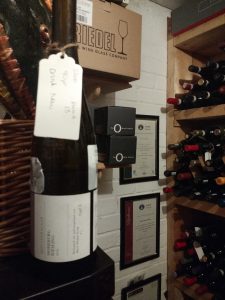
German Riesling can be bloody marvelous. The issue in the UK is getting the good stuff. This one is one of the good stuff, although this was purchased in Germany in a vineyard association trip. There are aromas of pear, honey and subtle smell of petrol, refined not in your face. This is a dry Riesling but the finish is rounded, there’s plenty of acidity but the fruit flavours that you initially smell are what come to fore to make this a well balanced wine.
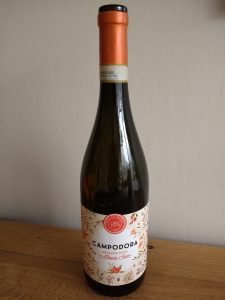
Well, an unusual wine from Italy. Thus is made from the Albana grape. It has aromas of peach, mineral notes which come through on the tasting. There are also lychee and flora hints and it has a reasonable length. High acidity adds to the overall balance. This is a really good wine that would be worthy of special occasion, birthday, anniversary or Saturday night. Ooohhhhh it’s only £12 a bottle as well.
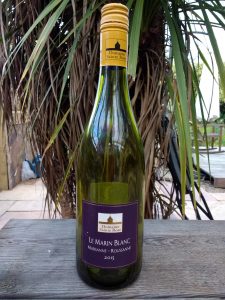
A Languedoc Roussillon wine mix of Marsanne, Rousanne and a little Viognier. It’s a dry white with flavours of pear drops, peachpand hints of vanilla from a little oak aging. This is a thicker wine in texture giving it an almost creamy feel. Great with summer meals or in the garden watching the sun set. At about £8 to £10 a bottle a very good every day wine.
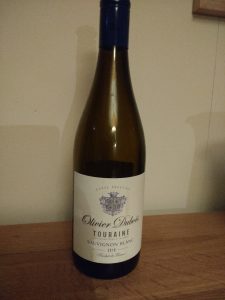
Standard Sauvignon Blanc is dry, has high acidity and flavours of gooseberry, tropical fruits and a fresh mineral taste. This is a classic affordable Sav Blanc, it does what its meant to do and is perfect with seafood, pasta, salty or acidic foods. With summer coming up this is a good white wine for the garden while catching a few rays of sunshine and at less than £10 decent value.